View a visual essay to complement this story, titled “.”
By Jenny Lavey, UM News Service
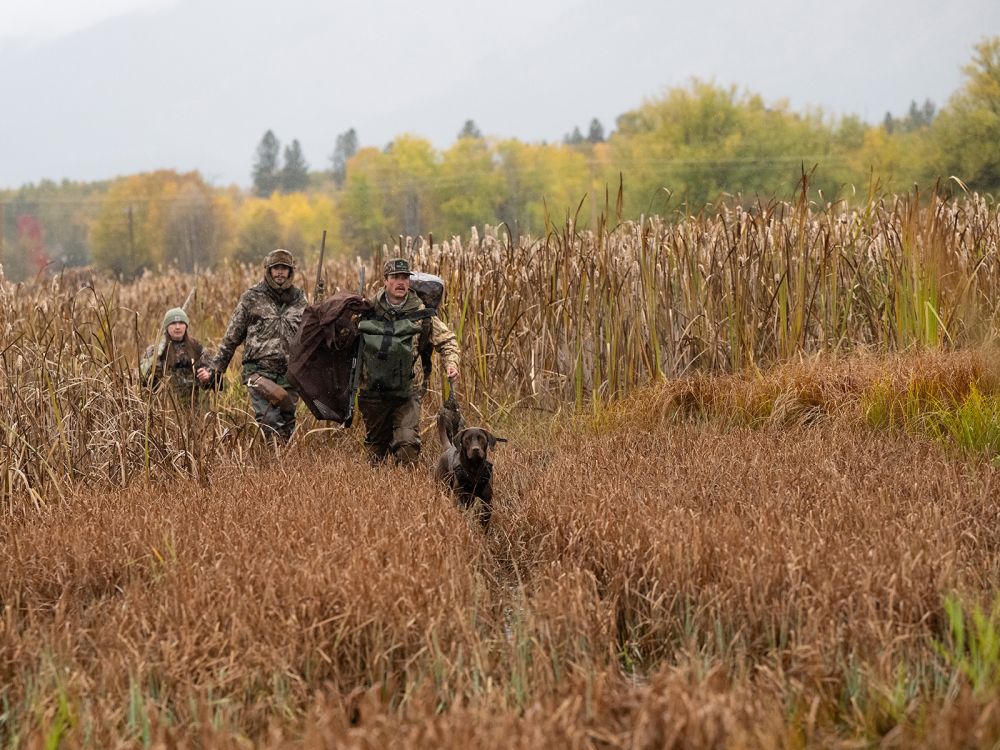
MISSOULA – On a chilly October morning at the Teller Wildlife Refuge, before most students had even reached for coffee, a group of 91视频 undergraduates crouched in cattails as geese lifted over the Bitterroot Mountains. For many students, this wasn’t just a workshop, of Montana’s backyard.
That might be why UM’s chapter of Backcountry Hunters & Anglers is popular club on campus, fueled by students seeking community, sustainable food sources, and a deeper relationship with the natural world.
Today, the club’s roster is steadily growing, and draws students from nearly every major at UM, including many newcomers to hunting and fishing who see the group as an entry point into Montana’s public lands and culture.
“Students are hungry for meaningful connection, not only to the land, but to each other,” said Amory Kindle, the chapter’s president and a junior from Salida, Colorado. “BHA gives them both. It’s a place where you can learn, ask questions and turn curiosity into real experience.”
Kindle said the club’s growing popularity stems from its mix of community, skill development and accessible pathways for beginners. The club offers catered experiences from ice fishing, wild game cookouts, fly-fishing and hunting experiences, complete with gear, instruction and mentorship surrounding what it takes to recreate in the backcountry.
“There’s a huge difference between getting outside alone versus being with people who support you, teach you to be safe, and help you understand this whole world of Montana,” he said. “That’s why mentorship is a big part of who we are. You don’t have to have experience in the outdoors to join.”

Beyond hunting and fishing, an ethos of the club is to steward and protect place. UM BHA members repair fences, pack out trash and teach fly-fishing basics to first-year students during UM’s weeklong, immersive orientation program, called the Big Sky Experience.
The club’s presence on social media has helped new students find it quickly, even those without prior outdoor experience.
“This club is for anyone who is interested in what this place offers,” Kindle said. “We have members who have been hunting their whole lives and students who don’t hunt but are curious about wild food sources and the environment.”
The UM chapter operates with guidance from the national Backcountry Hunters & Anglers organization, headquartered in Missoula, with a mission to ensure North America’s outdoor heritage of hunting and fishing in a natural setting, through education and work on behalf of wild public lands, waters and wildlife.
The national Backcountry Hunters & Anglers nonprofit coordinates advocacy, policy, membership, outreach and their overall mission, while local and state chapters implement groundwork like habitat stewardship, advocacy, events and community engagement. State chapters also mentor university clubs.
Josh Liljedahl is the Montana college club liaison on behalf of the Montana Chapter of Backcountry Hunters & Anglers. He said his role as club adviser is to help widen the doors to hunting and fishing by providing mentorship, and to help remove barriers to hunting and fishing, that are real and steep.
“If you’re not raised in a culture in hunting of fishing, and have access to those traditions and that knowledge, it can be very difficult to find an entry point,” he said. “That’s why the mentorship component is at the center of this experience. The club sets their own agenda, and we guide and advise by providing support and resources.”
In Montana, hunters born after January 1, 1985 must complete hunter education classes before they can purchase a hunting license. The state also provides an apprentice hunter option, which allows individuals 10 or older to hunt for up to two seasons before completing hunter education. Apprentice hunters must be accompanied in the field by a qualified mentor who is at least 21 years old, has completed Hunter Education and holds the proper license for the species and season. Additional education is required for certain activities, such as bowhunting.

“One of the best places we can get others into the sport is at the college level, when students are finding themselves and figuring out what they care about," Liljedahl said. "It's a great time to give them a taste of the outdoors and the abundance of our wildlands and wildlife, so that one day they may really care and appreciate this culture. Understanding and appreciating these pursuits helps to secure the future of the sport, with individuals who will fight for these traditions, and for these wild lands to continue.”
That approach resonates with a generation interested in sustainability and understanding the origins of their food. The club’s rise also aligns with UM’s academic strengths.
With nationally recognized programs in wildlife biology, forestry, climate, recreation management, journalism and creative writing, the University has long trained conservation leaders and outdoor storytellers, including UM alumnus and honorary doctorate Steven Rinella, host of the “MeatEater” series.
For many students, BHA becomes the place where academic learning and outdoor experience intersect. That intersection is increasingly important, said Libby Metcalf, interim dean of UM’s.
“As pressures mount on Montana’s public lands from development, recreation demands and shifting wildlife and habitat dynamics, an engaged, knowledgeable generation of students matters more than ever,” Metcalf said. “Student-led efforts like the BHA chapter are preparing members not just as participants in the outdoors, but as future leaders responsible for sustaining it.”
Metcalf leads the University college that serves as an intersection of outdoors expertise, coupled with research and curriculum that provide UM students with hands-on experience.
An example of that connection is UM’s Wild Sustenance class, supported by the Rocky Mountain Elk Foundation, that teaches sustainable hunting and wild game preparation. Additionally, UM is set to open a Center for Hunting and Conservation to advance the science, research, education and outreach to shape the future of land and wildlife management in the United States, also privately supported by RMEF.
Kindle said his journey at UM began with wanting to spend as much time outside as possible.
“I wanted to be in a community of young outdoorspeople, and this is the epitome of that,” Kindle said. “The reason why I moved to UM was for this kind of thing. UM is the golden star in our country for that.”
###